
The short answer: faster than most people expect
After water damage, mold can start growing typically within 24 to 48 hours under damp conditions. That range is a typical window, not a guarantee in either direction: growth can begin sooner where warmth, still air, and a food source line up, and it can take longer where drying starts quickly and air moves freely. The practical point is that the first day or two after water damage are the window when drying matters most. Every day a wet wall, floor, or ceiling cavity stays damp is a day the conditions for growth stay in place.
It helps to understand why the window is so short. Mold spores are present in ordinary indoor and outdoor air all the time, and they need only three things to grow: moisture, a food source, and time. A water-damaged home supplies all three at once. Drywall paper, wood framing, carpet backing, and dust all serve as food, and a wet cavity supplies moisture in the dark, still conditions where growth is hardest to see. Drying removes the one ingredient you can control, which is why prompt drying is the real defence — not sprays, paint, or air fresheners applied over a still-damp surface.
Conditions that speed growth
Warmth accelerates growth, and the comfortable temperatures of a lived-in home sit squarely in the range mold prefers. Still air matters just as much: a closed wall cavity, a closet, a basement corner, or the space behind a water-damaged cabinet dries slowly because air barely moves there, so moisture lingers long after the room itself feels dry. Porous materials hold moisture the longest — drywall, insulation, carpet padding, and unfinished wood stay damp well after hard surfaces have dried, which is why a floor that looks dry can still hide a wet layer underneath.
Hidden water is the biggest accelerator of all. Water that runs inside a wall, under flooring, or above a ceiling keeps feeding growth out of sight, and the first visible sign may appear far from the original wetting. That is why moisture readings matter more than appearances after water damage: a surface can feel dry while the material behind it remains wet enough for growth to continue. If drying only addressed what you could see, the hidden moisture keeps the clock running.
Where mold hides after water damage
After a leak or flood, check the places water reaches but eyes rarely do: inside wall cavities near the wet area, behind baseboards, under sinks and appliances, inside closets that share a wall with a bathroom or laundry, and in basement corners where water pooled. Ceiling cavities below an upstairs leak are another common hiding place, because water spreads across the top of the drywall before it stains the surface below. Attic spaces above a roof leak behave the same way.
Growth often announces itself indirectly before it is visible. A musty, earthy smell in a room that had water damage, even with no visible patch, is a reason to look deeper rather than to mask the odour. Staining that returns after cleaning, paint that bubbles in a previously wet area, or warped trim near a wet wall are all signs that moisture — and possibly growth — remains behind the surface.
Smell and visible signs to watch for
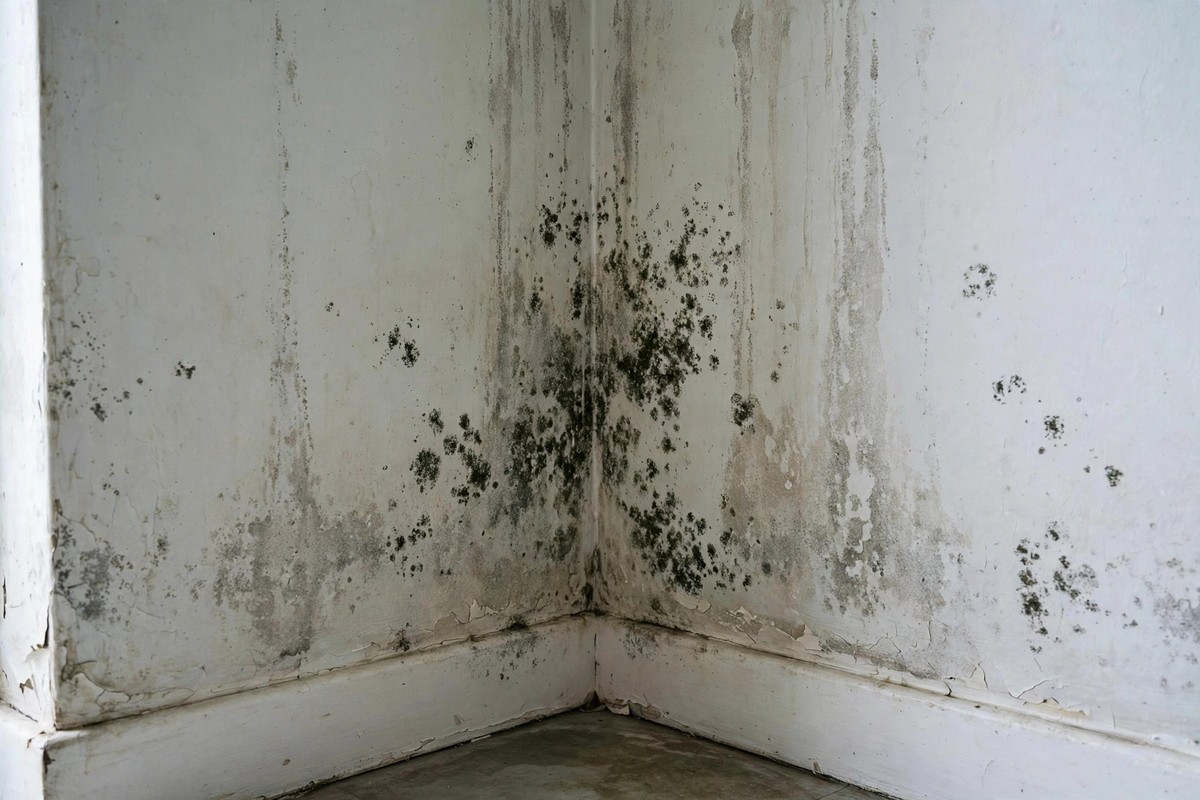
Visible growth can look like dark spots or patches, fuzzy or slimy textures, or discolouration that spreads outward from a damp area. Colours vary, and colour alone does not identify the type or the seriousness of growth, so do not try to judge safety from appearance. What matters is the pattern: growth that clusters near a known wet area, spreads over days, or returns after wiping is behaving like an active moisture problem, not a one-time mark.
Smell is often the earlier signal. A persistent musty odour in a previously wet room, especially one that strengthens when the room is closed up or when heating or cooling runs, suggests growth in a cavity or behind a surface. Odour that fades when windows open and returns when they close points the same way. Do not rely on smell alone either — some growth produces little odour, and some damp materials smell musty without visible growth — but treat a new musty smell after water damage as a prompt to investigate, not to spray over.
What helps, and what makes it worse
What helps is removing the moisture: stopping the source, removing standing water, and drying wet materials with airflow and, where appropriate, dehumidification, then verifying dryness with readings rather than touch alone. Removing materials that cannot be dried — such as saturated carpet padding or swollen drywall sections — is part of drying, not an extra step, because a material that stays damp will keep supporting growth no matter what is applied to its surface.
What makes it worse is sealing dampness in. Painting over a damp stain, closing a wet wall back up, or covering a musty area with new flooring traps moisture where growth continues out of sight. Household bleach on a porous surface is another common misstep: it may lighten the visible patch while leaving growth inside the material untouched, and the surface can look clean while the problem continues behind it. Scrubbing a large patch of visible growth without containment can also spread spores into the air and onto clean surfaces. When growth covers a large area, sits inside a wall or ceiling cavity, or keeps returning after cleaning, that is the point to call rather than to keep treating the surface.
When remediation is needed
Remediation is needed when growth is widespread, hidden inside cavities, or tied to moisture that has not been resolved — in other words, when cleaning the surface cannot reach the problem or the problem keeps coming back. The independent company connected through this site will typically map the moisture first, because remediation without drying is a short-lived fix: growth returns wherever dampness remains. The full service description is on the mold remediation page, and inspection options are covered on the mold inspection and testing pages.
Call promptly if anyone in the home has breathing difficulties that worsen in the affected room, if growth is visible across a wide area, or if water damage was never properly dried and a musty smell has developed since. For homes in and around South Jordan and the rest of the Herriman area, the same timeline applies — the first day or two after wetting are when action counts most, whatever the neighbourhood.
First steps after water damage
Stop the source if you can do so safely, then focus on drying: remove standing water, move wet belongings out of the area, and get air moving across wet surfaces while you arrange professional help. Photograph the wet areas and any visible growth before cleaning anything, and note when the water arrived — that date is the starting point for the growth timeline. Avoid painting, sealing, or covering wet areas, and avoid disturbing large patches of growth yourself.
Read more in our blogs and guides, or call (801) 780-0574 to describe what happened and get connected with an independent water damage company serving Herriman, UT and surrounding areas. The sooner drying starts, the shorter the window growth has to establish itself.
FAQ
How fast does mold grow after water damage?
Mold can start growing typically within 24 to 48 hours under damp conditions. That is a typical range, not a guarantee: growth can begin sooner where warmth, still air, and porous materials line up, and later where drying starts quickly.
What conditions make mold grow faster?
Warmth, still air, and porous materials such as drywall, insulation, and carpet padding all speed growth, because they hold moisture long after hard surfaces dry. Hidden water inside wall or ceiling cavities is the biggest accelerator, since it keeps feeding growth out of sight.
What are the first signs of mold after water damage?
A musty, earthy smell in a previously wet room is often the earliest sign, even with no visible patch. Visible signs include dark spots or patches, fuzzy textures, discolouration spreading from a damp area, and stains that return after cleaning.
Does bleach kill mold on drywall?
Bleach may lighten a visible patch on a porous surface while leaving growth inside the material untouched, so the surface can look clean while the problem continues behind it. Drying the material and removing what cannot be dried matters more than surface treatment.
When should I call for mold remediation instead of cleaning it myself?
Call when growth covers a large area, sits inside a wall or ceiling cavity, keeps returning after cleaning, or is tied to moisture that has not been resolved. Remediation without drying is short-lived, so the moisture must be mapped and removed first.
What should I have ready when I call?
When the water arrived, where the wet areas are, whether there is a musty smell or visible growth, what has been dried so far, and your Herriman-area ZIP. Photos of the wet areas and any visible growth help triage.
Herriman notes for mold after water damage
For mold growth after water damage in Herriman, UT, the first day or two are the decisive window. Homes here are often newer, but closed cavities in newer construction dry slowly because there is less airflow, so a room that feels dry can still hide a damp wall or ceiling cavity where growth continues. Do not judge dryness by touch alone.
Basements and lower levels deserve special attention after any wetting, because water pools there and air moves less. A musty smell in a previously wet basement room, even with no visible patch, is a reason to investigate rather than to mask the odour.
When comparing options, weigh drying verification against surface treatment. A cleaned-looking surface over a still-damp cavity is a temporary result, while verified drying plus removal of materials that cannot be dried is what keeps growth from returning. Call (801) 780-0574 to get connected with an independent company serving Herriman, UT and surrounding areas.