
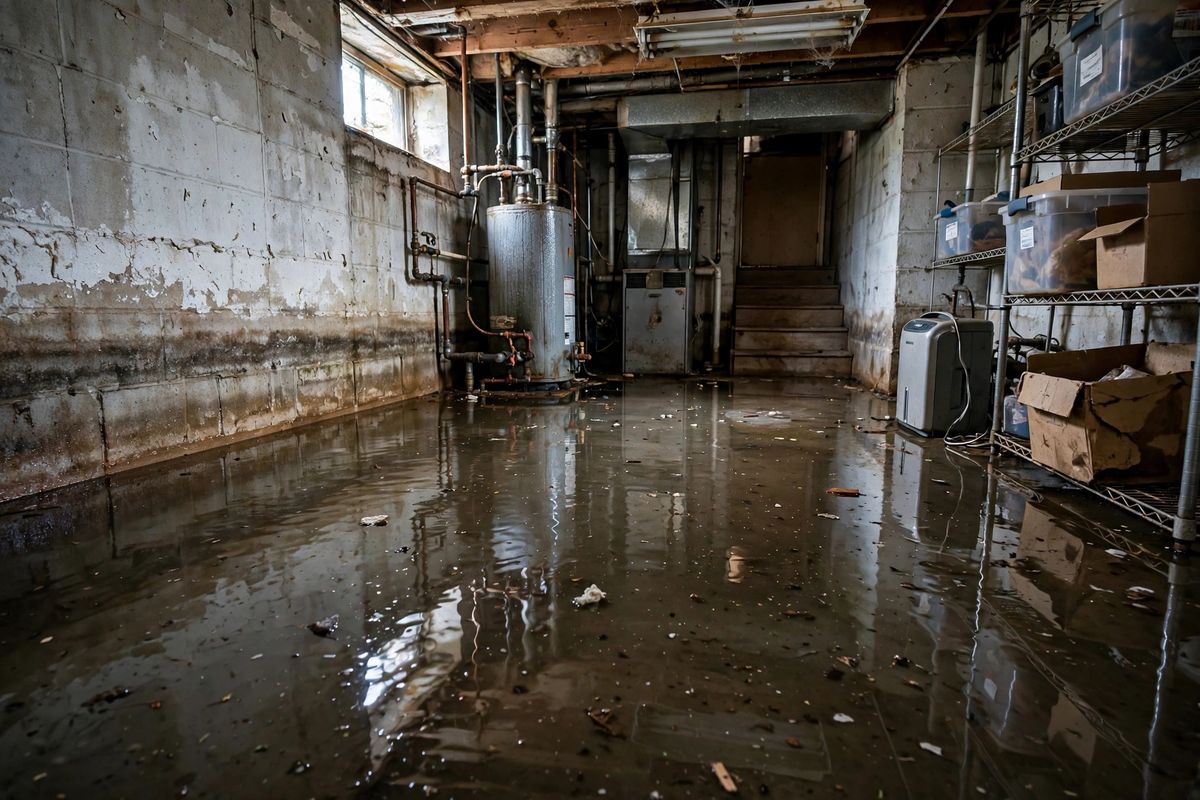
Safety first: electricity, gas, and the water itself
A flooded basement is the one water-damage situation where the first move is not to start cleaning — it is to decide whether the space is safe to enter at all. Water and electricity are a dangerous combination: if water has reached outlets, appliances, the furnace, or the electrical panel, do not step into the water or touch switches and appliances while standing in it. If you can reach the main breaker safely from a dry location, switching power to the basement off removes the largest immediate risk. If the panel itself is wet or reachable only through standing water, stay out and call for help instead.
Gas deserves the same caution. If you smell gas, hear hissing near the furnace or water heater, or the water has reached gas-fired equipment, leave the area and call your gas utility or emergency services from outside before doing anything else. Do not light anything, do not operate electrical switches in the affected area, and do not re-enter until the area has been declared safe. Floodwater itself can also be hazardous: water from a sewer backup, a drain overflow, or ground flooding may carry contaminants, so avoid contact with it, keep children and pets away, and treat any water whose source you cannot confirm as unsafe to wade through.
Stop the source if you can do so safely
Once safety is established, the next priority is stopping more water from arriving. The source decides the move: a burst supply line or failed appliance hose usually has a nearby shutoff; a sump pump failure may need the pump reset, cleared, or replaced; a water heater leak has its own supply shutoff; and groundwater or storm entry through a foundation gap cannot be shut off at all, in which case the focus shifts to pumping and keeping water away from the foundation outside. If you cannot identify the source, note what you can — where water is entering, how fast it is rising, and which fixtures or equipment sit nearby — and share that when you call (801) 780-0574.
Do not delay the call while hunting for a source you cannot find. The independent company connected through this site can triage by phone: the entry point, the depth, and whether the water is rising or stable all shape what happens next. If water is rising fast, or if it involves sewage, say so up front, because both change the urgency and the equipment involved.
Document the damage before you move anything
Before pumping or moving belongings, photograph and video the basement as it stands: the waterline on the walls, the depth at several points, affected appliances and stored items, and the entry point if it is visible. Capture wide shots of each wall and close-ups of serial plates on the furnace, water heater, and major appliances, since those details are hard to recover once equipment is moved or dried. Keep a simple written list of damaged items with approximate dates of purchase if you know them, and keep any receipts for emergency work, because documentation made in the first hours is far more complete than anything reconstructed later.
If you have home insurance, call your insurer early in the process and ask what documentation they want and whether they require an adjuster visit before any material is removed. Do not throw damaged items away until you have photographed them and confirmed what your insurer needs to see. A flooded basement is stressful enough without losing a claim detail to a hurried cleanout.
Protect what can still be saved
Move dry belongings out of the water's path, starting with items on the floor and working upward: boxes, electronics, fabrics, and stored papers absorb water quickly and are much harder to save once soaked. Lift furniture onto blocks where possible, and move valuables to a dry level of the home. For items already wet, separate them so air can reach all sides — stacked wet boxes dry far more slowly than spaced ones — and prioritise papers, photographs, and fabrics, which deteriorate fastest.
Wet carpet and padding deserve a decision, not a delay. Carpet that has been soaked, especially by contaminated water, often cannot be saved, and padding almost always needs removal because it holds water against the floor and subfloor. Hard surfaces such as concrete and tile can usually be cleaned and dried, but the layers beneath them — underlayment, baseboards, and the bottom of drywall — need checking, because they hide the moisture that causes later problems. The cleanup service details are on the flooded basement cleanup page, and rapid removal options are on the emergency water extraction page.
Pumping and drying basics
Small amounts of clean water can sometimes be handled with a wet vacuum and mops, but deeper water, fast-rising water, or contaminated water calls for professional pumping equipment. Never run a standard household vacuum on standing water, and never pump water into a neighbour's property or a sanitary drain where it is not permitted — pump to a suitable outdoor area away from the foundation, following local guidance. Once standing water is out, drying begins: air movement across wet surfaces, dehumidification to pull moisture from the air, and removal of baseboards or lower drywall sections where moisture is trapped behind them.
Drying a basement is not finished when the floor looks dry. Concrete, framing, and the bottom of drywall all hold moisture that surface drying misses, and moisture readings are what confirm the space is actually dry. Rushing to reinstall carpet or refinish walls over a damp slab or damp framing traps that moisture, and the result is usually a musty basement and a second round of work. For homes near Bluffdale and across the Herriman area, the same rule applies: verify dryness before rebuilding, whatever the season.
What not to do in the first 24 hours
Do not enter a flooded basement where water has reached electrics or gas equipment. Do not use household electrical appliances in standing water. Do not pump sewage-contaminated water with the same equipment you would use for clean water, and do not assume floodwater is clean because it looks clear. Do not seal wet walls back up, reinstall flooring over a damp floor, or paint over a waterline before the structure is verified dry. And do not wait days to start: the first 24 hours are when drying is most effective and when mold growth has the least head start.
Read more in our blogs and guides, or call (801) 780-0574 to describe the flooding and get connected with an independent water damage company serving Herriman, UT and surrounding areas.
FAQ
Is it safe to enter a flooded basement?
Not always. If water has reached outlets, appliances, the furnace, or the electrical panel, do not step into the water or touch switches while standing in it. If you smell gas or water has reached gas equipment, leave and call your gas utility or emergency services from outside.
What should I do first when my basement floods?
Check safety first, then stop the source if you can do so safely, document the damage with photos and video, and call for help. Do not start cleaning until you know whether electrics, gas, or contaminated water make the space unsafe to enter.
Should I pump the water out myself?
Small amounts of clean water can sometimes be handled with a wet vacuum, but deeper water, fast-rising water, or contaminated water calls for professional pumping equipment. Never use a standard household vacuum on standing water.
How do I document basement flood damage for insurance?
Photograph and video the waterline, the depth at several points, affected appliances and stored items, and serial plates on the furnace and water heater. Keep a written list of damaged items and receipts for emergency work, and call your insurer early to ask what they need.
Can wet basement carpet be saved?
It depends on the water source and how long it stayed wet. Carpet soaked by contaminated water often cannot be saved, and padding almost always needs removal because it holds water against the floor. Hard surfaces can usually be cleaned and dried, but the layers beneath them need checking.
How long does a flooded basement take to dry?
It depends on depth, materials, and whether hidden moisture sits behind baseboards, under flooring, or in the bottom of drywall. Drying is finished when moisture readings confirm the structure is dry, not merely when the floor looks dry — rebuilding over damp materials traps moisture and causes repeat problems.
Herriman notes for flooded basements
For flooded basements in Herriman, UT, safety checks come before cleanup in every case. Basements here often house the furnace, water heater, and electrical panel together, so floodwater reaches critical equipment quickly — and that is exactly when entering the water becomes dangerous. If the panel or gas equipment is affected, stay out and call for help.
Groundwater and storm entry behave differently from a burst pipe: there is no shutoff to close, so pumping, exterior drainage, and verified drying matter more than finding a valve. Note where water enters and whether it rises with storms, and share that pattern when you call.
When comparing options, weigh verified drying against speed of rebuild. A basement refloored over a damp slab will usually need the work done twice, while a basement dried and verified first stays finished. Call (801) 780-0574 to get connected with an independent company serving Herriman, UT and surrounding areas.