
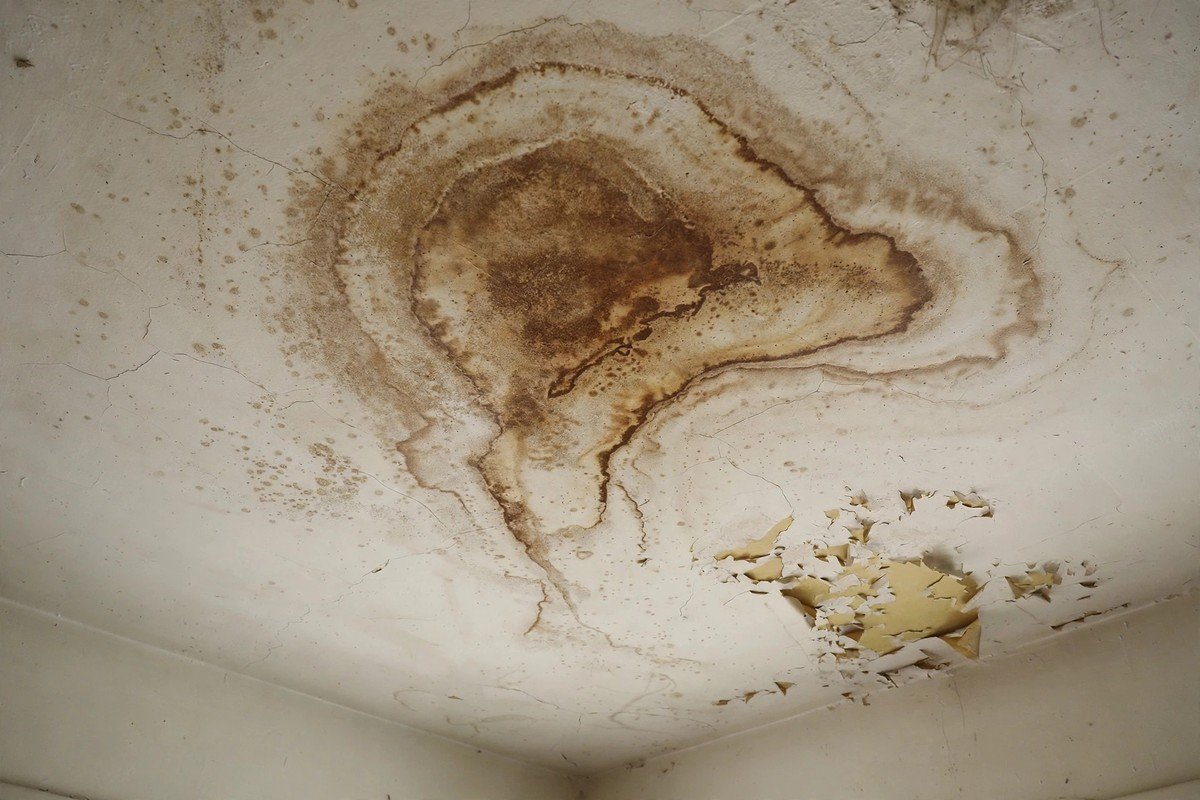
What a ceiling stain actually is
A stain on a ceiling is a record of water that has passed through, not a leak in itself. Water from a bathroom above, a supply line, a roof detail, or a condensation path soaks into drywall and leaves minerals and discolouration behind as it dries. The mark you see is usually the end of the water's journey, not the start: water travels along joists, pipes, and seams, then appears at the lowest or weakest point of the ceiling. That is why a stain in a living room can trace back to a fixture two rooms away, and why the stain alone never tells the whole story.
Understanding a stain means reading it the way you would read a symptom. Colour, shape, edges, and change over time each carry information about how much water was involved, whether it is still coming, and how urgently the ceiling needs attention. None of these clues replaces a moisture reading, but together they help you decide whether you are looking at a dried-up past event or an active problem that needs a prompt call to (801) 780-0574.
What stain colour can tell you
The most common ceiling stain is yellow-brown, often with a darker ring at the edge. That ring forms as water spreads outward and deposits dissolved material at the drying edge, much like a coffee ring. A yellow-brown ring usually points to a slow, repeated wetting: a small plumbing drip, a shower surround that lets water past, or a roof path that only runs during storms. The colour itself does not identify the source, but a ringed stain is a strong hint that water has arrived more than once.
A darker brown or grey-brown patch suggests a larger volume of water or a longer wetting period, because more material has been carried into the drywall. Very dark or blackish discolouration inside a stain deserves extra caution: it can mean the area has stayed damp long enough for surface growth to begin, and it should not be scrubbed or disturbed until the moisture behind it has been assessed. A pale, chalky, or white-edged mark, on the other hand, often appears where water has dried and left mineral deposits, and it can be the signature of an older event that has since stopped — though only a moisture reading confirms that the cavity behind it is truly dry.
Colour can also mislead. A fresh leak through clean water can leave a faint mark at first and darken over days, while an old stain can look alarming yet be completely dry. Treat colour as a first clue, not a verdict, and always pair it with the timing and behaviour described below.
What stain shape can tell you
Shape is often more informative than colour. A roughly round stain with a defined ring usually follows a single drip point directly above, such as a fitting or a nail hole where water finds its way through. A long, streaked, or branching stain suggests water running along a joist or pipe before it soaks through, which means the source may sit well away from the visible mark. A wide, diffuse blotch with soft edges points to a broader wetting, such as water spreading across insulation or pooling on top of the drywall before soaking in.
Edges matter too. A sharp, dark outer ring with a lighter centre is typical of a stain that has dried and re-wet several times, with each cycle adding another ring. A stain whose edges are still spreading, or that grows noticeably after showers, laundry, or rain, is behaving like an active leak. A stain that has held the same size and colour for months is more consistent with a past event — but again, a closed ceiling cavity can hold moisture long after the surface looks settled, so a stable appearance is reassuring, not conclusive.
Active leak or old stain? How to tell
The single most useful test is timing. Note when the stain changes: does it darken or grow after showers, baths, or laundry cycles, which points to plumbing above? Does it appear or spread during rain, which points to the roof or exterior? Does it stay exactly the same through both, which leans toward a past event? Keep a simple note of dates and weather for a week or two, and photograph the stain from the same spot so changes are easy to compare. That record is also the most helpful thing you can share when you call.
Touch and smell add further clues, used with care. A stain that feels cool or damp to the back of the hand, paint that bubbles or feels soft, or a musty smell in the room below all suggest moisture is still present behind the surface. A stain that feels dry, firm, and odour-free may be old — but drywall can feel dry on the surface while the cavity above stays damp, especially where insulation sits against the back of the board. If the stain is growing, bubbling, or dripping, do not wait for it to settle: call (801) 780-0574 and describe the timing you have observed.
One more distinction matters: a stain that returns after repainting is telling you the problem was never resolved. Paint seals the surface and hides the wet footprint underneath, so the stain pushes through again once moisture builds. Repainting over a stain without finding the source and drying the cavity is the most common reason homeowners deal with the same mark twice.
When a stained ceiling is a safety concern
Most stains are a repair problem, not an emergency — but three signs change that. A ceiling that sags, bows, or feels soft across a wide area is holding water weight, and saturated drywall can fail without warning. Water dripping near light fixtures, ceiling fans, or recessed lights adds electrical risk, and the room should be avoided until the area is assessed. And a stain that is spreading fast, with steady dripping, means water is arriving faster than the ceiling can hold it.
In any of those cases, keep people and belongings out from under the area, do not press, poke, or cut the ceiling yourself, and call promptly. A sagging ceiling can release a large volume of water at once, and the cavity may hold wiring or plumbing you cannot see. For guidance on urgent water removal, see the emergency water extraction page.
First steps to take now
Start with observation, not repair. Photograph the stain and, if you can do so safely, the room above it. Note the timing pattern, the shape and colour, and whether the surface feels damp or the paint is bubbling. Move furniture, electronics, and rugs out of the drip path and place a bucket or towels below if there is any dripping. If a fixture above is the likely source and you can safely reach its shutoff, closing it can slow a plumbing-fed leak while you wait.
Next, resist the two most common mistakes: painting over the stain and ignoring it because it looks dry. Painting traps moisture and destroys the very clues diagnosis needs, while ignoring a stain lets a slow leak keep wetting the cavity, where it can weaken drywall and support mold growth out of sight. The right sequence is always the same: find the source, dry the cavity, then repair the surface. A full description of that repair sequence is on the ceiling water damage repair page.
What the independent company's visit usually covers
When you call, the independent company connected through this site will typically start below, with the stain itself, then check the room above for bathrooms, laundry, water heaters, and condensate lines. Moisture readings on the ceiling and the floor above map how far the wet area extends beyond the visible mark, because the wet footprint is almost always larger than the stain. That map decides whether the ceiling can dry in place or needs a controlled opening to reach the source and dry the cavity.
Having a few details ready makes triage faster: where the stain is, when it changes, what sits in the room above, whether the ceiling sags or drips, and your Herriman-area ZIP. Photos of the stain and the room above help too. If you live near Riverton or elsewhere in the surrounding area, the same process applies — the source above matters far more than the neighbourhood, and the visit follows the water, not the stain.
What not to do with a ceiling stain
Do not paint over it, do not poke or cut a sagging section to drain it, and do not assume a dry-looking stain is a finished problem. Do not run a household fan at a closed ceiling and assume the cavity is drying: air moving across the surface does little for moisture trapped above the board. And do not delay a call when the stain is growing, the ceiling is sagging, or water is near electrics. A stain is a message from the floor above, and the longer it goes unread, the more of the ceiling it tends to involve.
Read more in our blogs and guides, or call (801) 780-0574 to describe what you are seeing and get connected with an independent water damage company serving Herriman, UT and surrounding areas.
FAQ
What does a brown ring on the ceiling mean?
A brown ring usually means water has spread through the drywall and dried at the edges, leaving dissolved material behind as a ring. Ringed stains often follow a slow, repeated wetting, such as a small plumbing drip or a roof path that only runs during storms.
How can I tell if a ceiling stain is from an active leak?
Watch the timing: stains that darken or grow after showers, laundry, or rain point to an active source, while a stain that never changes may be old. A damp feel, bubbling paint, or a musty smell also suggests moisture is still present. A moisture reading is the reliable way to confirm.
Can a ceiling stain be old and still need attention?
Yes. A stain can look dry on the surface while the cavity above stays damp, especially where insulation sits against the back of the drywall. If the stain is large, dark, or in a ceiling that has never been checked, a moisture reading is worth getting before assuming it is finished.
Is it safe to paint over a ceiling water stain?
No, not before the source is found and the cavity is dried. Paint seals the surface and hides the wet footprint underneath, so the stain usually pushes through again and the trapped moisture keeps damaging the drywall out of sight.
When should I call about a ceiling stain right away?
Call promptly if the ceiling sags or feels soft, water drips steadily, water is near light fixtures or fans, or the stain is spreading fast. Keep clear of a sagging area and do not poke or cut it yourself.
What should I have ready when I call?
Where the stain is, when it changes, what sits in the room above, whether the ceiling sags or drips, and your Herriman-area ZIP. Photos of the stain and the room above help triage.
Herriman notes for ceiling water stains
For ceiling stains in Herriman, UT, start with the room above, not the mark. Two-story homes put bathrooms, laundry, and water heaters directly over living spaces, so the source is usually one floor up — and the stain is usually not directly below it. Note the timing first: plumbing-use timing and rain timing point at different sources, and that single detail saves a misdirected repair.
Newer construction does not prevent ceiling stains; it changes where they hide. Closed cavities in newer homes dry more slowly because there is less airflow, so a stain that looks settled can still hide a damp cavity. If a stain appears after a long shower or a laundry cycle, check the fixture above before assuming the roof.
When comparing options, weigh drying verification against speed of repair. A ceiling closed up while still damp will stain again and can support mold growth in the cavity, so a repair that includes moisture readings is worth more than a fast patch. Document the stain with photos before any work, and call (801) 780-0574 to get connected with an independent company serving Herriman, UT and surrounding areas.